Frontend developer & interface enthusiast
10 years writing interfaces, specializing in video platforms and crypto products. I like small tools, tight loops, and things that load fast.
10 years of experience designing and building scalable user interfaces with React and Next.js, specializing in video platforms and crypto products. Led the complete frontend redesign of Namasha and built a white-label crypto exchange platform from scratch. Award winner at six international blockchain hackathons.
Experience
- Designed and built decentralized web apps on the Lukso, Algorand, 0G, and Avalanche networks
- Delivered complete products from scratch under very tight timelines, using a new framework/toolset on each project
- Invested in personal growth and kept skills current with the latest frontend trends, including AI-assisted product development
- Won awards at six international hackathons — see Achievements
- Complete redesign of the UI and frontend for the Namasha video-sharing platform
- Built a white-label crypto exchange platform, covering both OTC and Exchange modes
- Redesigned and implemented the Pikofile download page and the Blogsky blog template
- Built internal tools to speed up content and support team workflows
- Worked closely with backend and sales teams; ensured cross-browser/cross-device compatibility
- Designed and developed UI for corporate clients' websites and mobile apps
- Optimized frontend code and fixed technical issues post-launch
Achievements
- 3rd place, Avalanche Hackathon — Plutus
- 3rd place, DataverseOS Hackathon — Lucid
- 3rd place, Lukso "Hack the Grid" — Echo
- 4th place, Algorand Hackathon — Twins
- Sponsor Award, ethGlobal 2024 — Handshake
- Community Track winner, Lukso "BuildUP" — Luxo
- All project code at github.com/almoloo
Education
Skills
Frontend
Web3
Other
Languages
English — Fluent

NewFolder
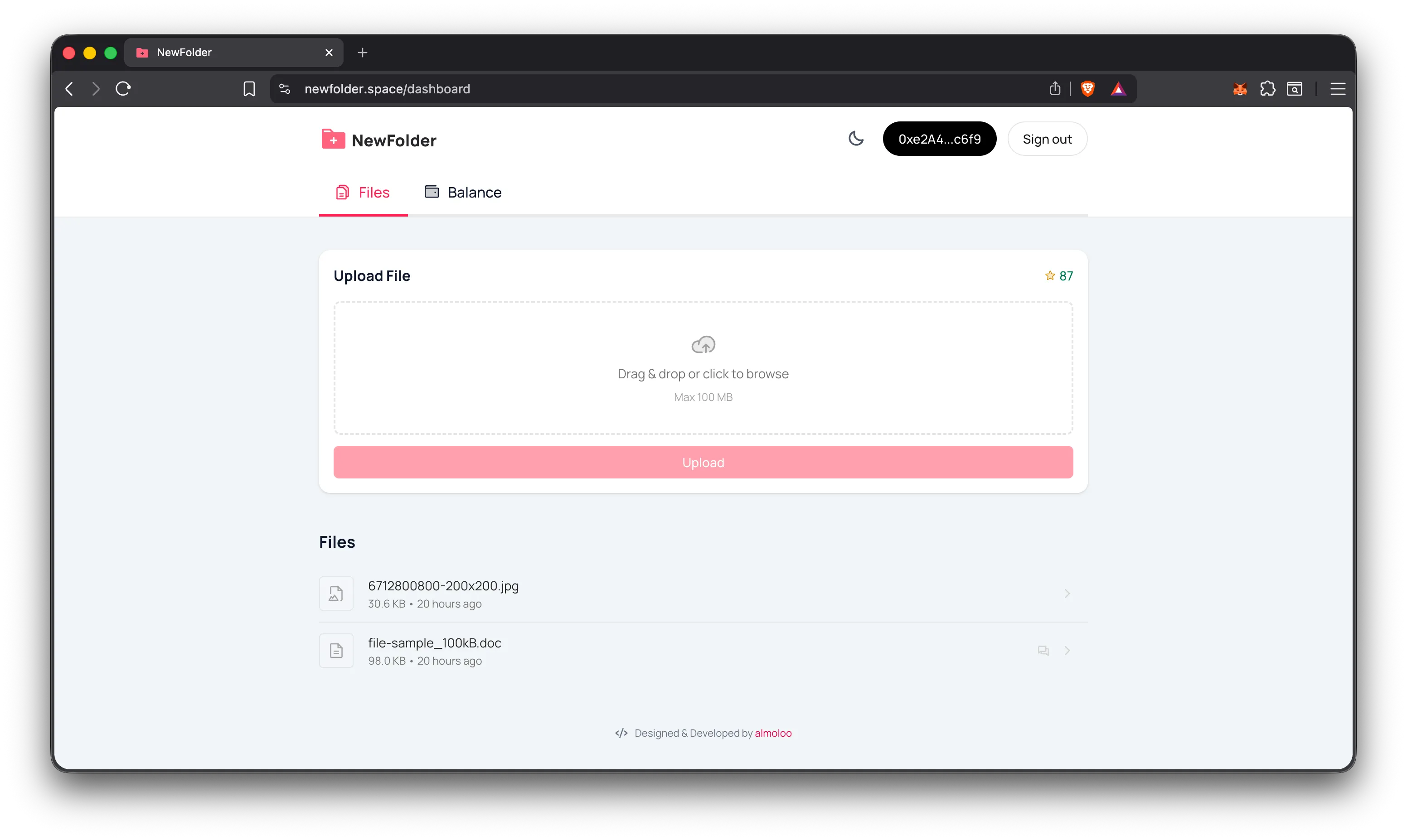
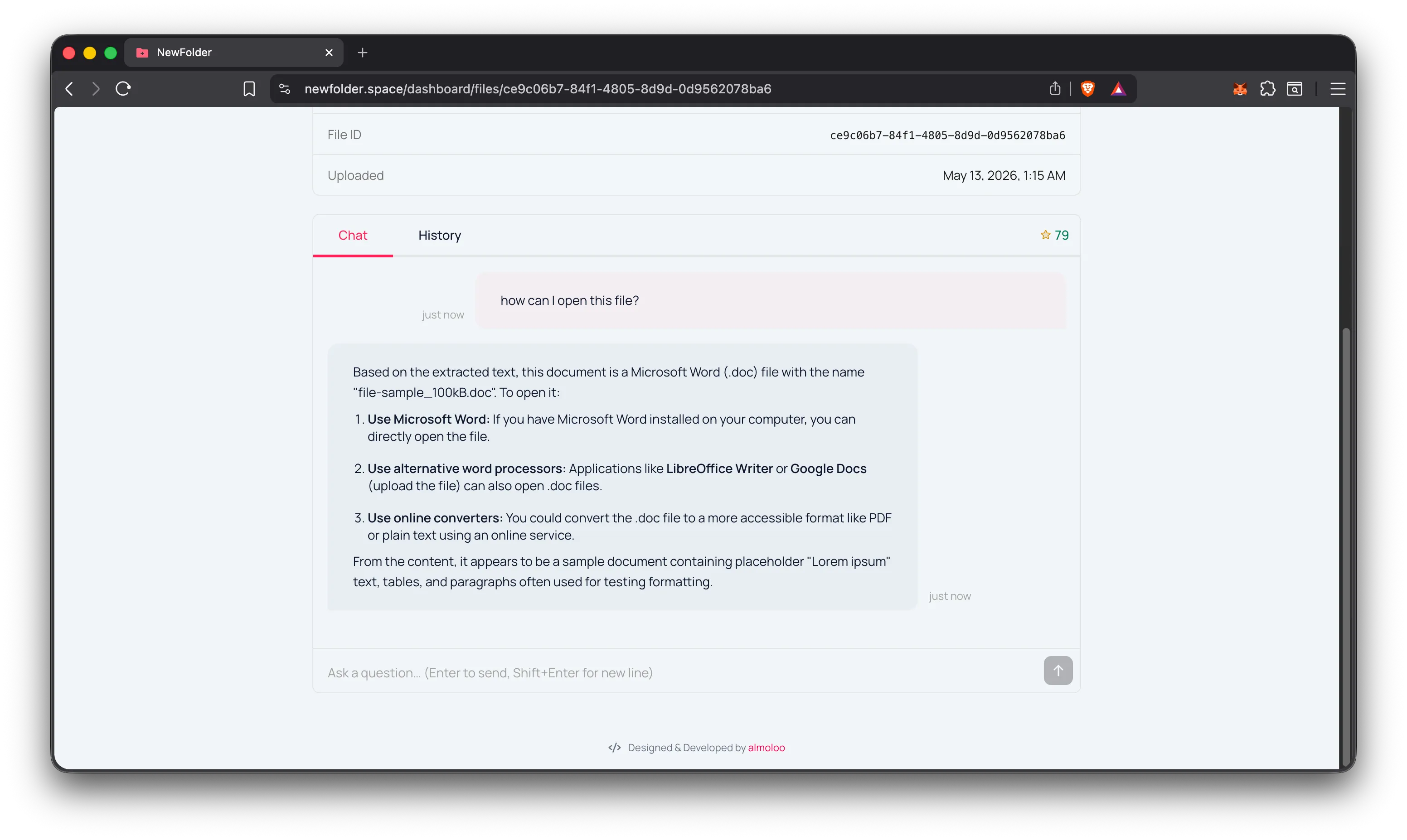
NewFolder is a decentralized document platform: upload a PDF, Word doc, or spreadsheet, store it permanently on the 0G decentralized storage network, then have a conversation with it using verifiable AI inference from the 0G Compute Network. No centralized servers hold the data, no subscriptions — just pay-per-use credits, settled in crypto.
How it works
Uploads go through the 0G Storage SDK and are content-addressed, so a file can’t be silently deleted or tampered with. When a user asks a question, the app pulls the file back from 0G storage, extracts its text, and routes the query to a verifiable AI inference provider on the 0G Compute Network — every response is attributable to a specific, checkable provider rather than an opaque backend.
Credits are funded by a small, auditable CreditVault smart contract: users top up with 0G, and the contract forwards 100% of funds straight to the treasury — no funds are ever custodied by the contract itself.
Key features
- Decentralized storage — content-addressed uploads that can’t be tampered with or silently removed
- AI document chat — streaming answers grounded in the file’s actual content
- Wallet authentication — Sign In With Ethereum, no passwords or email
- Pay-per-use credits — top up with 0G, no monthly fees
- Shareable files — generate a public link for any uploaded document
Tech stack
Next.js 16 (App Router, Turbopack) · Tailwind CSS v4 · Better Auth + SIWE · RainbowKit / Wagmi / viem · 0G Storage & Compute SDKs · PostgreSQL + Drizzle ORM · Solidity + Foundry
Screenshots

Mandal
Mandal is a Chrome extension that watches Mantle explorer pages and gives visitors an instant, AI-generated risk read on whatever contract they’re looking at — before they connect a wallet or sign anything.
How it works
When the extension detects a contract page on Mantle’s explorer, it pulls the contract’s source, creator, and balance from the Mantle Explorer API, then sends the source code to GPT-4o for a security pass: reentrancy, overflow, access-control gaps, and other common attack patterns. Results are cached for three days so repeat visits are instant, and combined with off-chain signals — domain age via WHOIS, scraped dApp metadata — to build a fuller trust picture than on-chain data alone.
Anyone can also file a community report against a contract or dApp (scam, phishing, honeypot, etc.), so the risk signal isn’t purely AI-generated over time.
Key features
- AI-powered contract analysis — risk-level scoring (Low/Medium/High/Critical) with a plain-English summary
- DApp metadata intelligence — domain age and scraped site metadata as trust signals
- Real-time monitoring — activates automatically on Mantle explorer pages, mainnet and testnet
- Community reports — crowdsourced warnings layered on top of the AI analysis
Tech stack
Backend: Hono.js · PostgreSQL + Prisma ORM · OpenAI GPT-4o · Cheerio Extension: React 19 + TypeScript · Vite 7 · TanStack Query · Tailwind CSS v4 · React Aria Components

Lotto
Lotto is a decentralized lottery built entirely on Cadence smart contracts — session creation, ticket sales, winner selection, and prize distribution all happen on-chain, so nothing about the draw depends on trusting a server.
How it works
Anyone can create a session with a ticket price and end time; buyers purchase tickets with FLOW up to a per-wallet cap. Once a session expires, anyone can close it — closing triggers Flow’s native revertibleRandom() to pick a winner, weighted by ticket count, and the pool is split automatically:
- 85% to the winner
- 10% to the session creator
- 2.5% to the platform
- 2.5% to whoever closed the session (an incentive to keep sessions moving)
Key features
- Provably fair randomness — verifiable on-chain selection, no possibility of manipulation
- Time-based sessions with automatic state transitions (Active → Expired → Winner Picked → Completed)
- Full transparency — every ticket purchase and payout is a public transaction
- Session dashboard — track your created sessions, tickets, and history
Tech stack
React 19 · TypeScript · Vite · React Router 7 · Tailwind CSS 4 · shadcn/ui · Cadence smart contracts · Flow CLI / Emulator

Flow
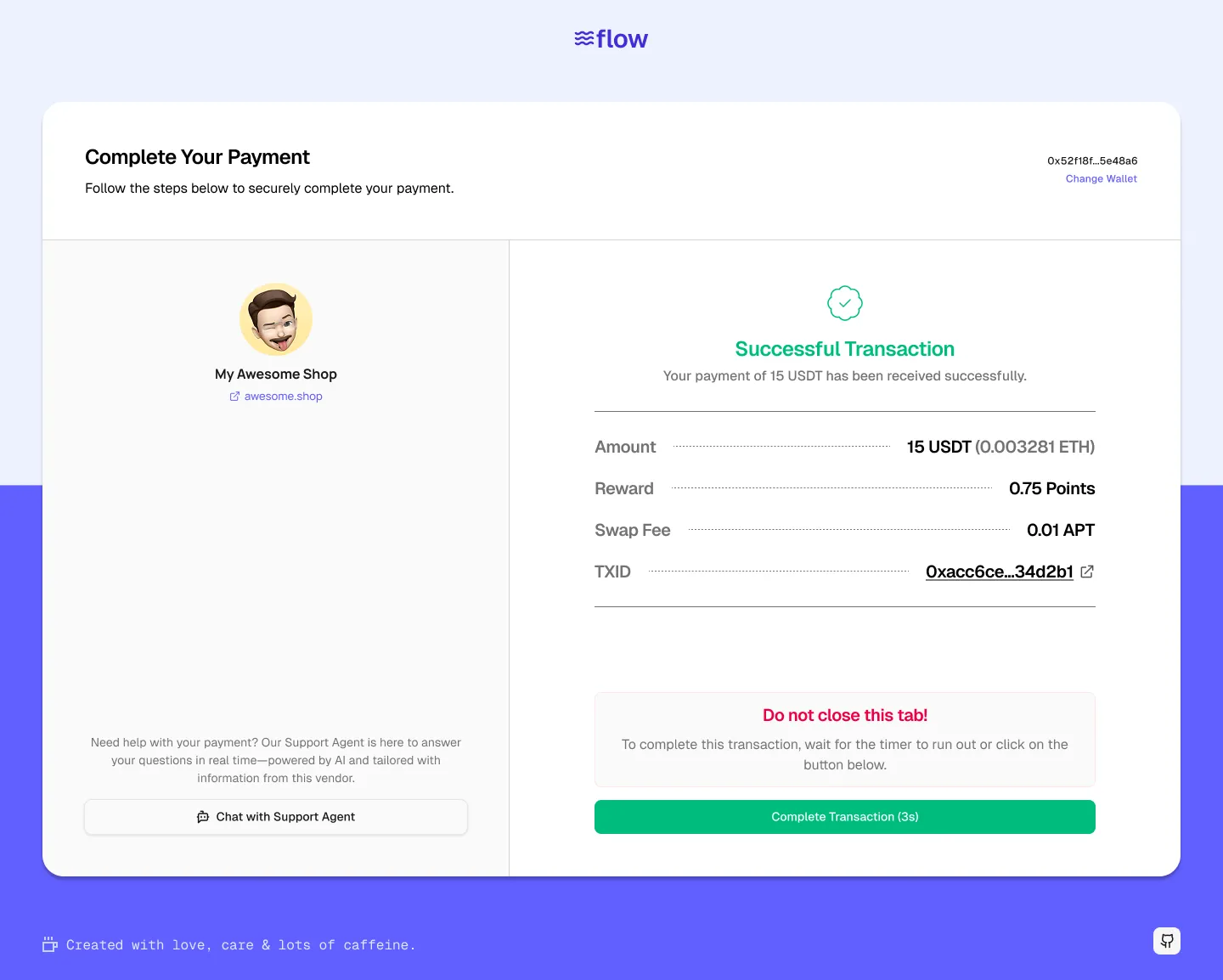
Flow is a payment gateway for small businesses that removes crypto’s biggest adoption blocker: volatility. Customers pay with whatever token they hold — APT, BTC, USDT, and more — and vendors always receive stable USDT, with the conversion handled automatically on-chain.
How it works
Every incoming payment is swapped through the Liquidswap DEX on Aptos before it reaches the vendor’s balance, so the vendor never has to think about price movement between “customer paid” and “funds settled.” Vendors get shareable payment links (and short links) per gateway, a full transaction/customer dashboard, and an AI support agent — powered by OpenAI — that fields customer questions during checkout.
The core logic lives in Move smart contracts: a Vendor resource tracks gateways and balances, and a Gateway resource tracks individual payments, so the whole payment history is auditable on-chain rather than sitting only in a database.
Key features
- Multi-token payments settling to stable USDT via automatic swapping
- AI support agent for customer questions during checkout
- Payment links — shareable per-gateway links, plus short links
- Analytics dashboard — customers, transactions, and gateway performance
- PWA-ready — mobile-first, installable interface
Tech stack
Next.js 14 · Tailwind CSS + shadcn/ui · React Query · Aptos blockchain + Move contracts · Liquidswap · MongoDB · MinIO · OpenAI GPT-4
Built with Hossein.
Screenshots

Echo
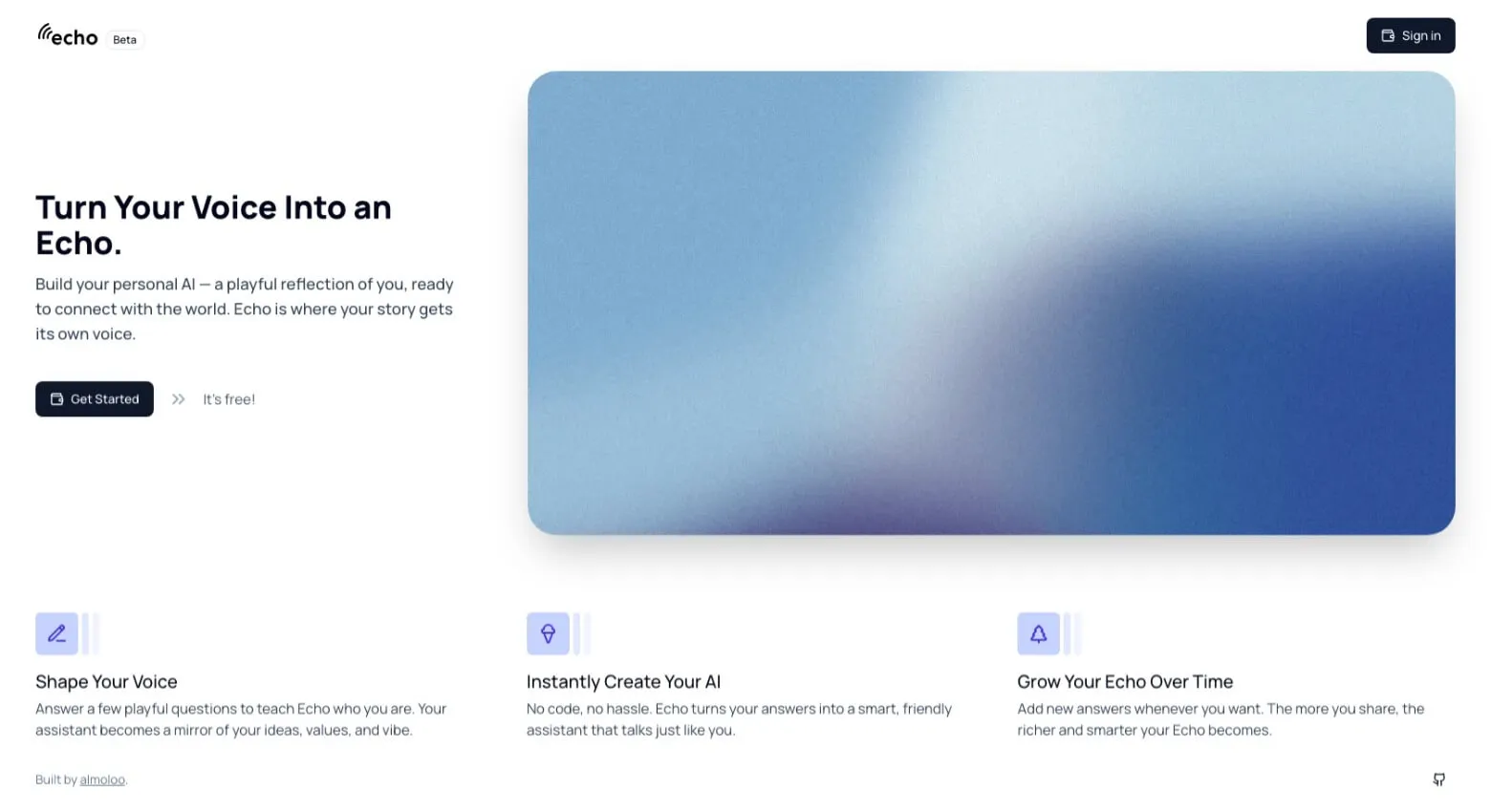
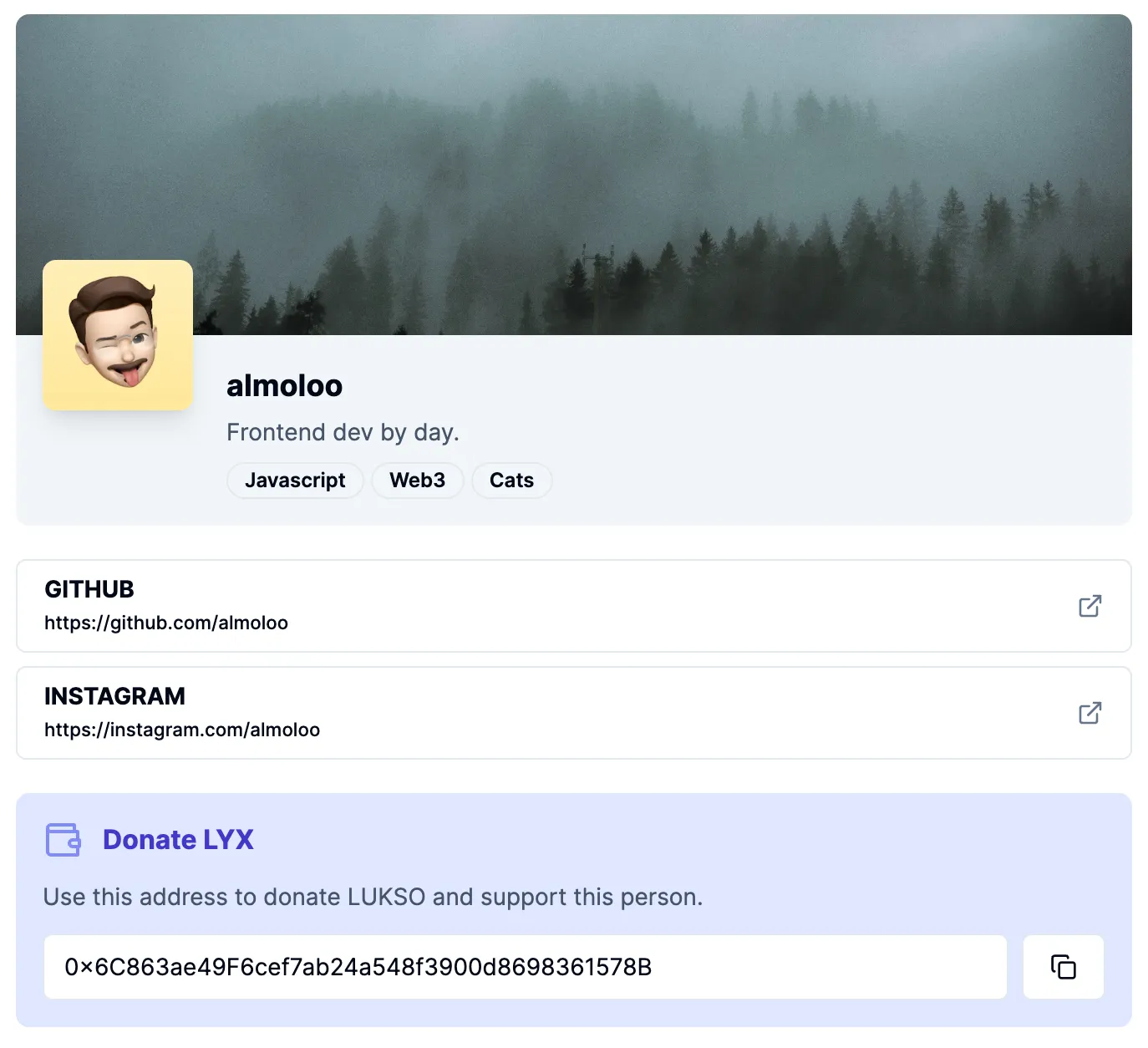
Echo turns a Lukso Universal Profile into something visitors can actually talk to. Profile owners train a personal AI assistant by answering a set of AI-generated questions about their career, identity, and connections; visitors embed the widget on their profile grid and can then ask it questions, leave a message, or send an LYX donation directly through the interface.
How it works
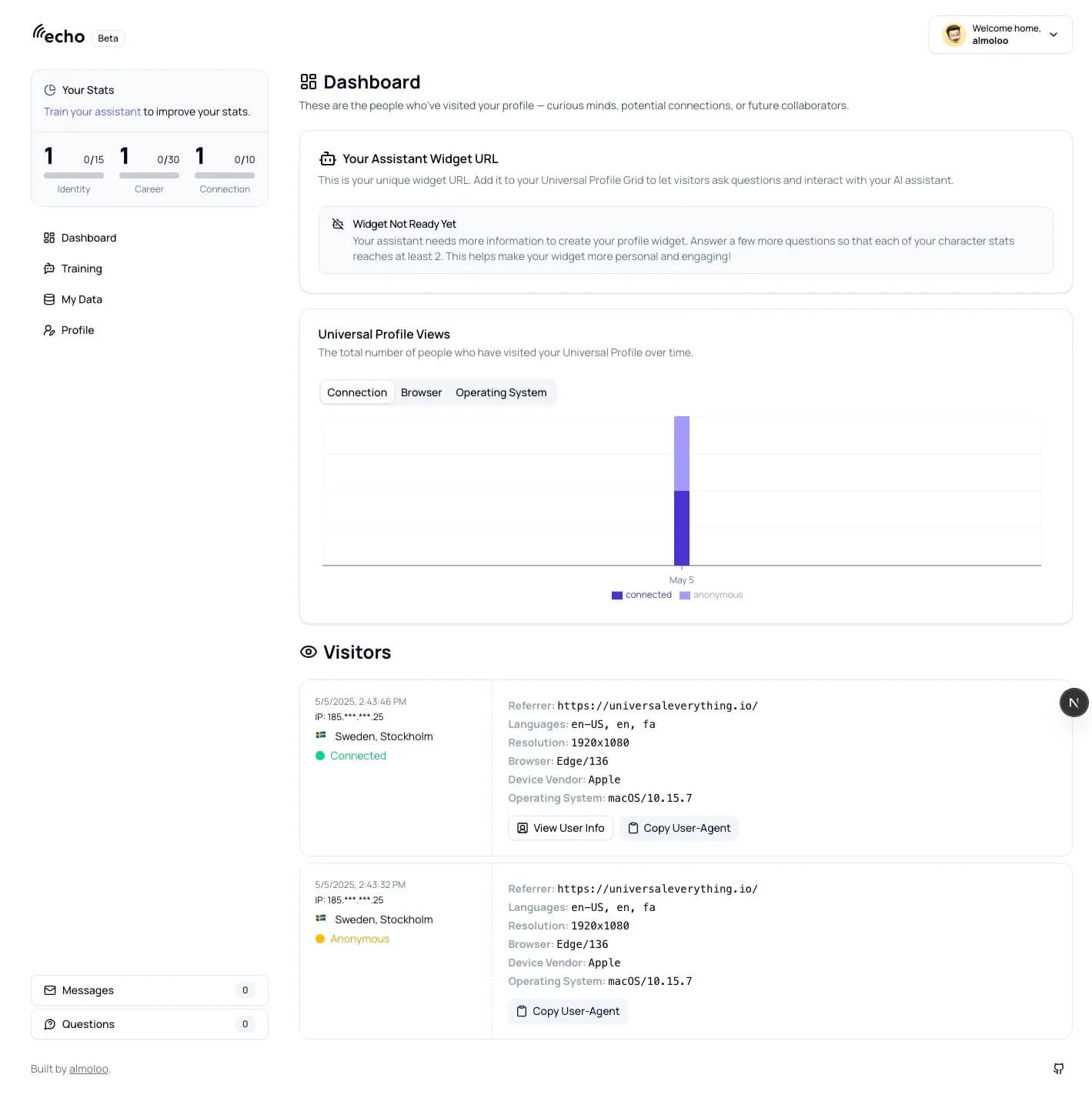
Anything the assistant can’t answer gets logged for the owner to review, so the assistant’s coverage improves the more it’s used instead of staying static. Owners get an analytics dashboard covering visitor device, location, and profile info (when available) alongside the log of unanswered questions — a feedback loop for what to train next.
Key features
- Personal AI assistant trained through a guided Q&A flow plus public profile data
- Visitor engagement — questions, messages, and LYX donations through one widget
- Continuous learning — unanswered questions are logged for the owner to fill in later
- Analytics dashboard — visitor metrics and question logs in one place
- Universal Profile integration — blockchain-native authentication and donations via LSP7
Tech stack
Next.js · TypeScript · Tailwind CSS + shadcn/ui · MongoDB · NextAuth · Lukso Universal Profile standards (ERC725, viem.js) · OpenAI API
Screenshots

Middleman
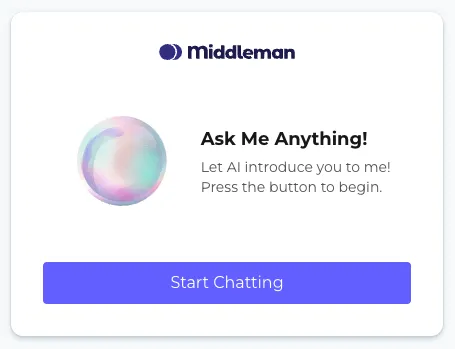
Middleman is the earlier of two projects exploring the same idea — an AI layer between a Lukso profile and the people visiting it. Users answer AI-generated questions about themselves, their answers are stored on IPFS so they keep ownership of the data, and visitors get a conversational assistant that answers strictly from what the owner chose to share.
How it works
Question generation and the visitor-facing chatbot both run through OpenAI’s Assistant API. Users pick which AI-generated questions to answer and which to skip — a privacy-first design where nothing gets stored without explicit opt-in — and responses are pinned to IPFS via Pinata rather than a centralized database. The result is a lightweight, embeddable widget for Lukso’s profile grid.
Key features
- AI-generated questions — personalized per user, skippable at will
- Decentralized storage — all answers stored on IPFS, owned by the user
- Interactive AI assistant — answers visitor questions using only the owner’s provided data
- Lightweight profile widget — fast-loading embed for Lukso’s grid
Tech stack
Next.js · TypeScript · Tailwind CSS · OpenAI Assistant API · IPFS (Pinata)
Screenshots

NFTea
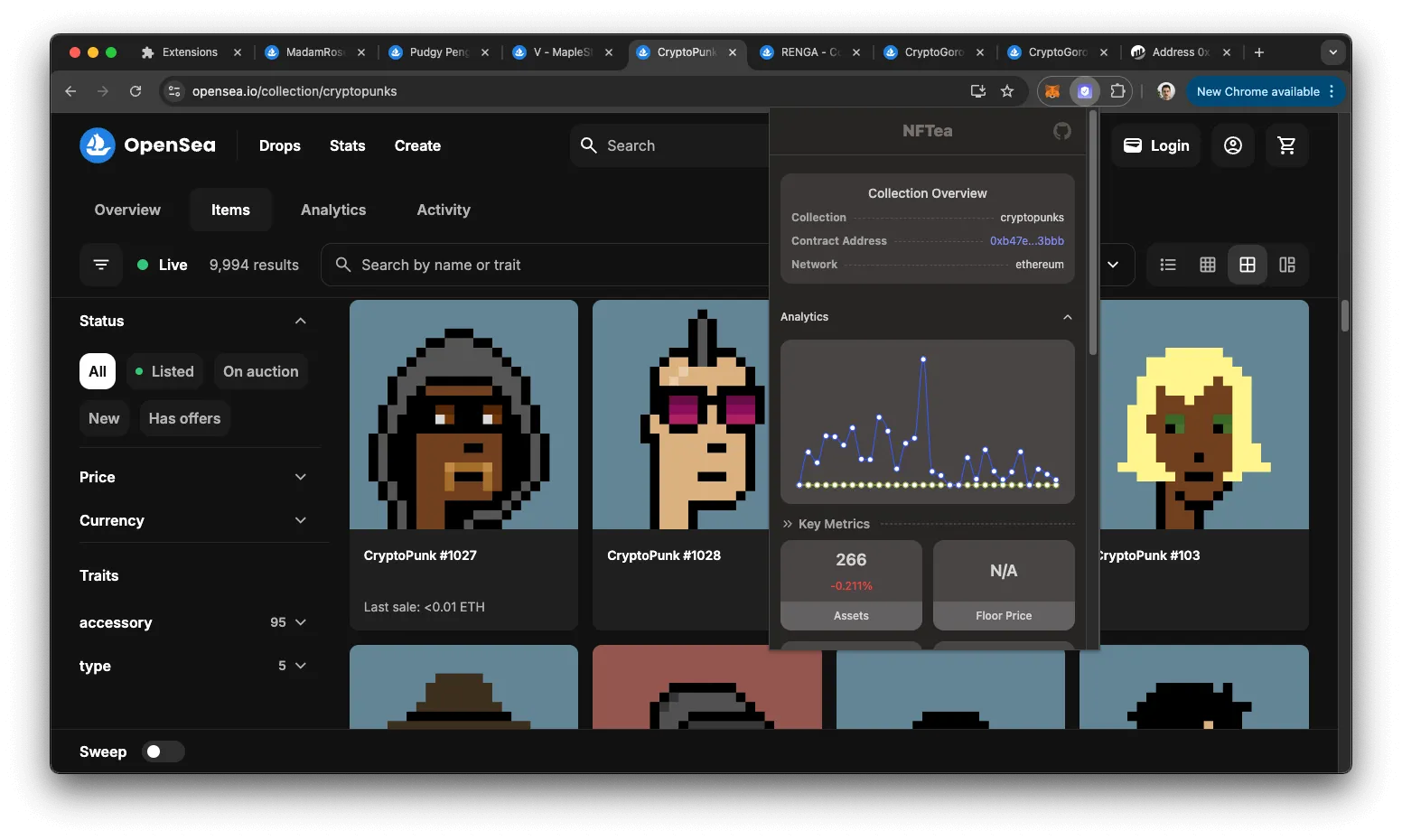
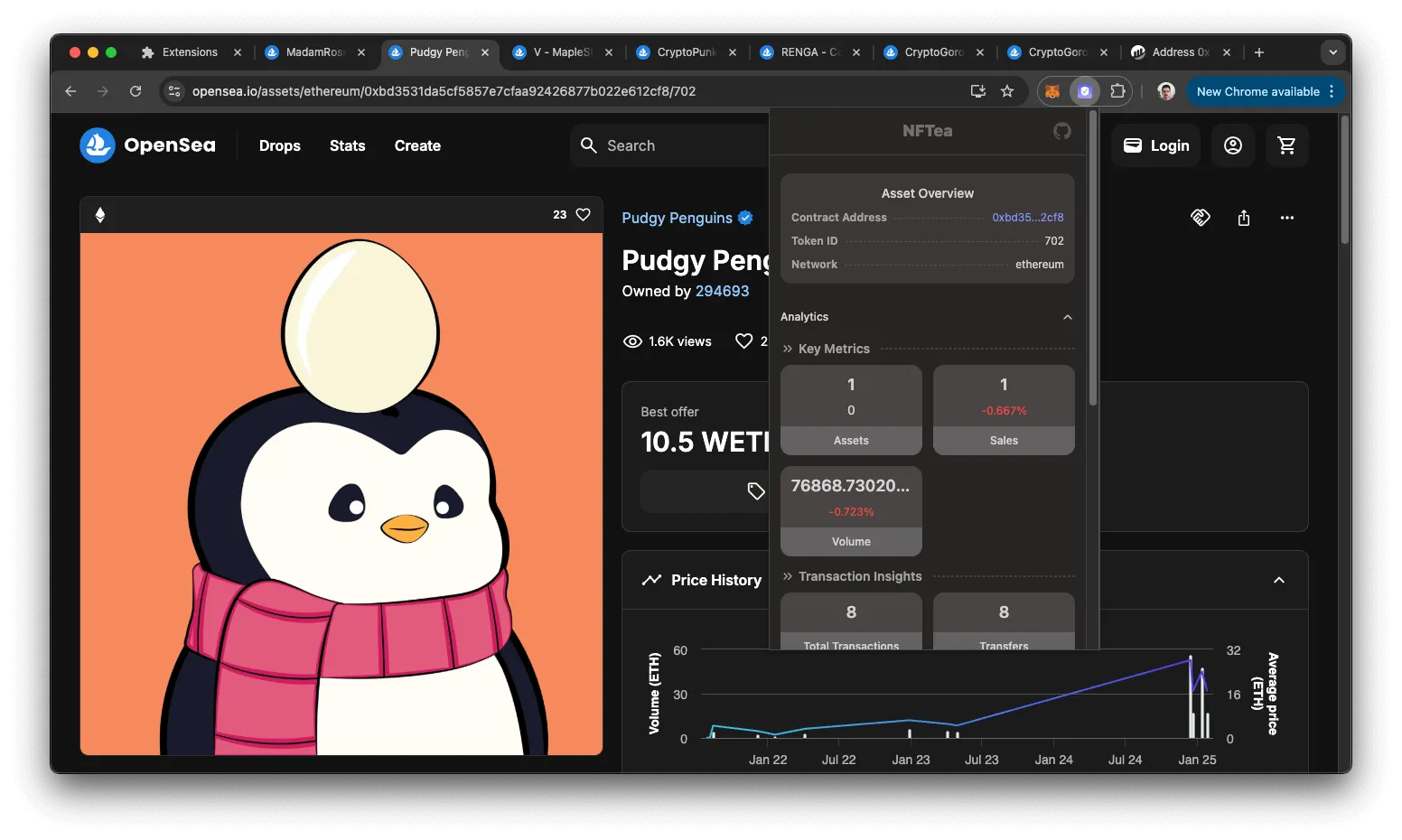
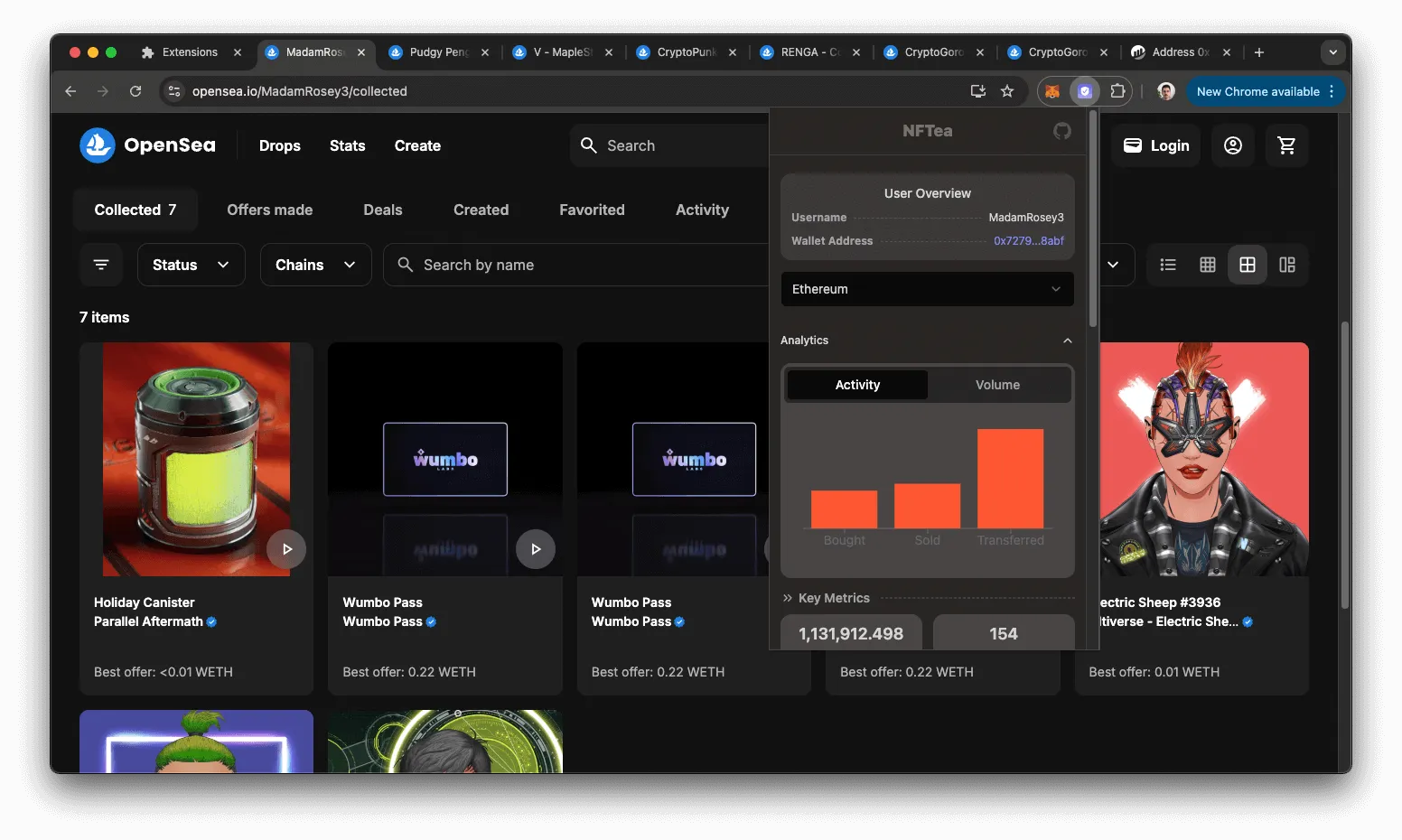
NFTea brings market data into the page you’re already browsing instead of sending you off to a separate analytics dashboard. Browse a collection, asset, or wallet on OpenSea, and the extension overlays historical price/volume trends, holder distribution, and trading-pattern analysis — including wash-trade detection — right there.
Key features
- Collection insights — price/volume history, holder distribution, whale tracking, trading-pattern scoring
- Asset details — price analytics, current holder, trading history, price estimates
- Wallet analytics — portfolio performance, trading patterns, activity metrics
- Wash-trade detection across collections, assets, and wallets
- Privacy-respecting — only reads the current OpenSea URL, no personal data collected
Tech stack
React · TypeScript · Tailwind CSS + shadcn/ui · OpenSea API · UnleashNFT API
Screenshots

PlanWise
PlanWise takes the blank-page problem out of event planning. Sign in, answer a short series of questions about the event, and the AI assistant generates a personalized checklist, budget breakdown, and sponsor-matching plan to work from — rather than starting from a spreadsheet.
Key features
- AI-assisted planning — personalized checklists and plans generated from a Q&A flow
- Smart sponsor matching — automatically pairs tasks with suitable sponsors to stretch the budget
- Budget management — AI-guided allocation and tracking as the plan evolves
- Progress tracking — a dashboard view of task completion and milestones
Tech stack
Next.js · Tailwind CSS · Radix UI · Firestore · Akash Chat API

Xenia
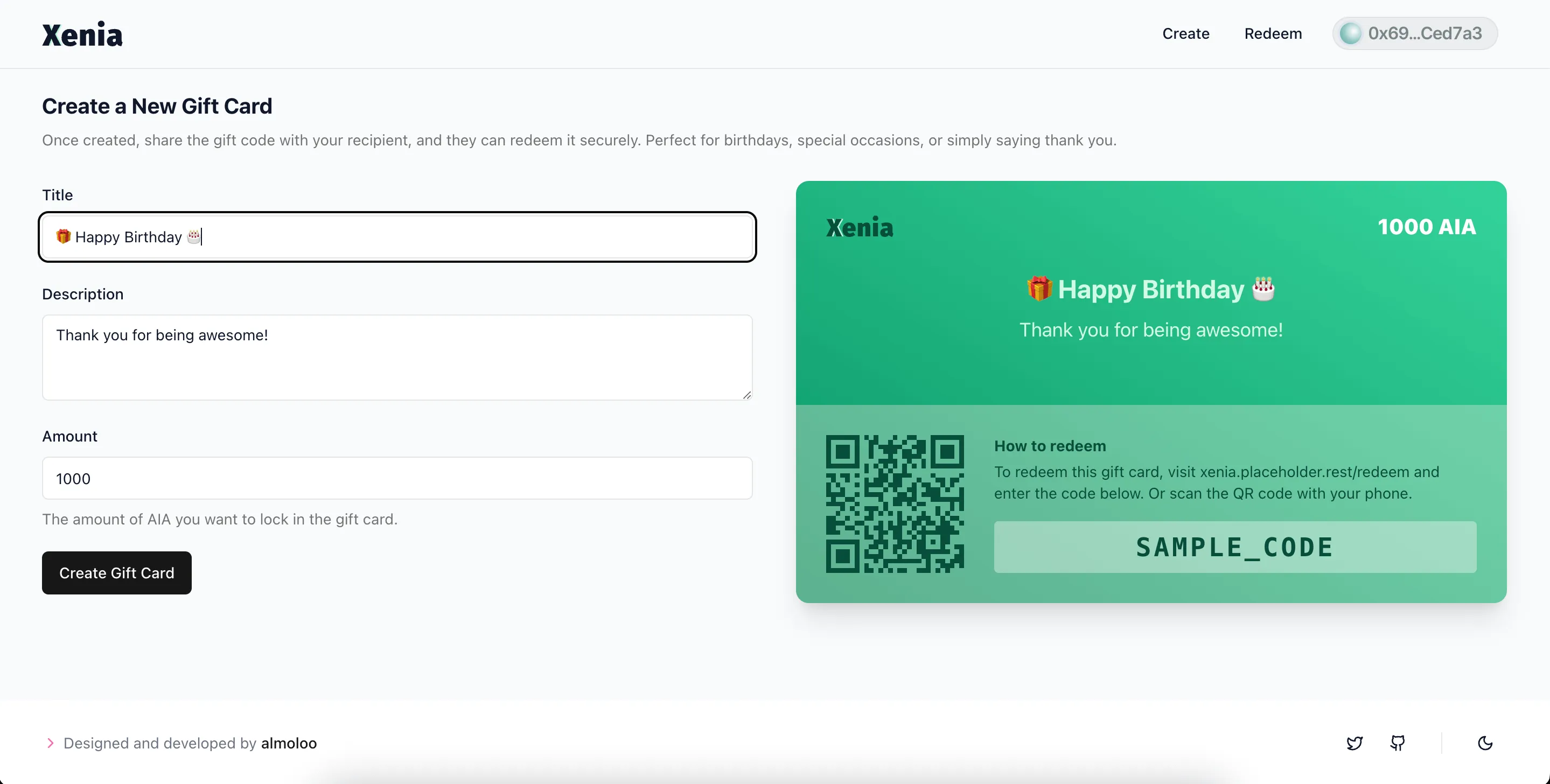
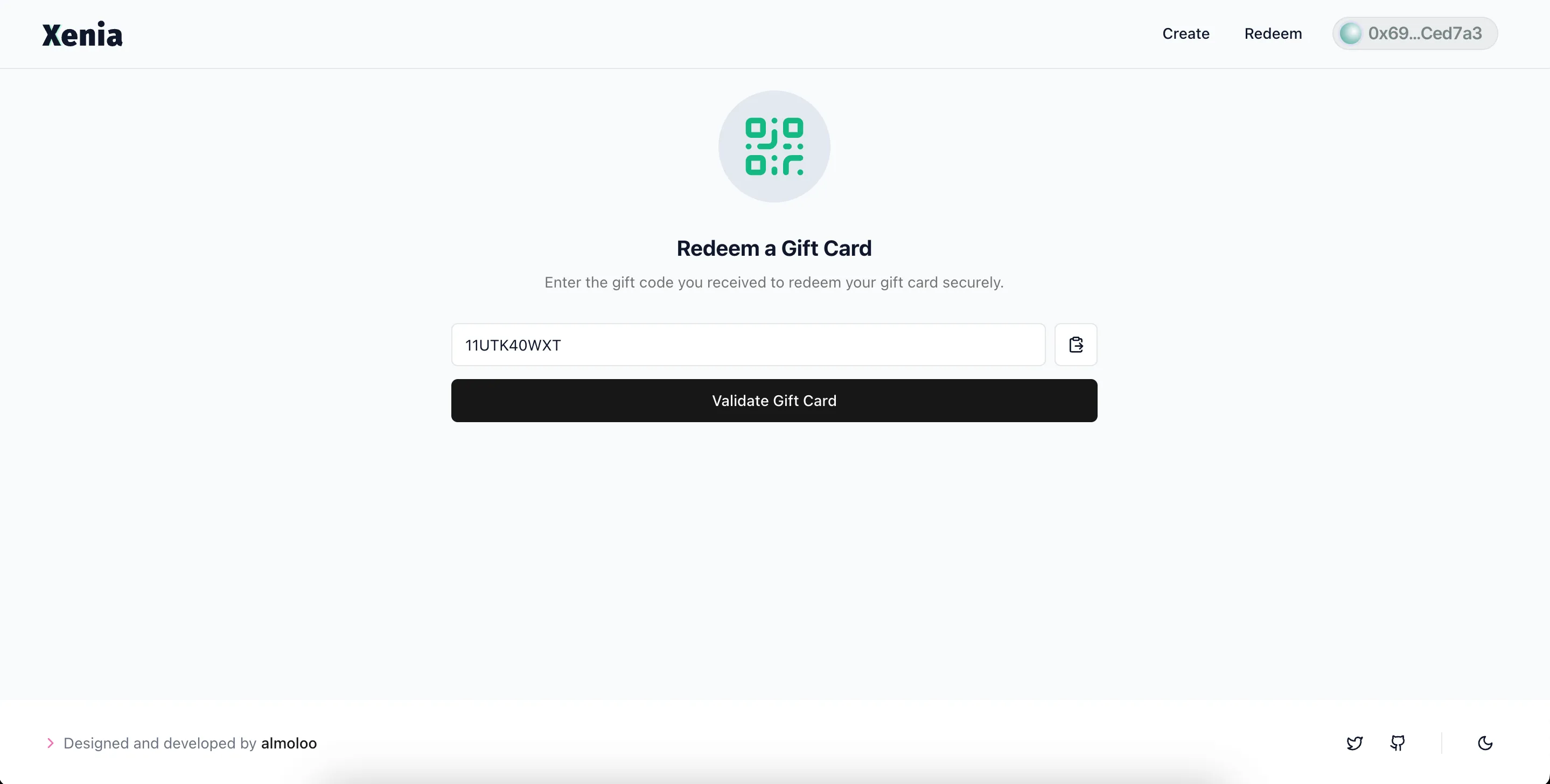
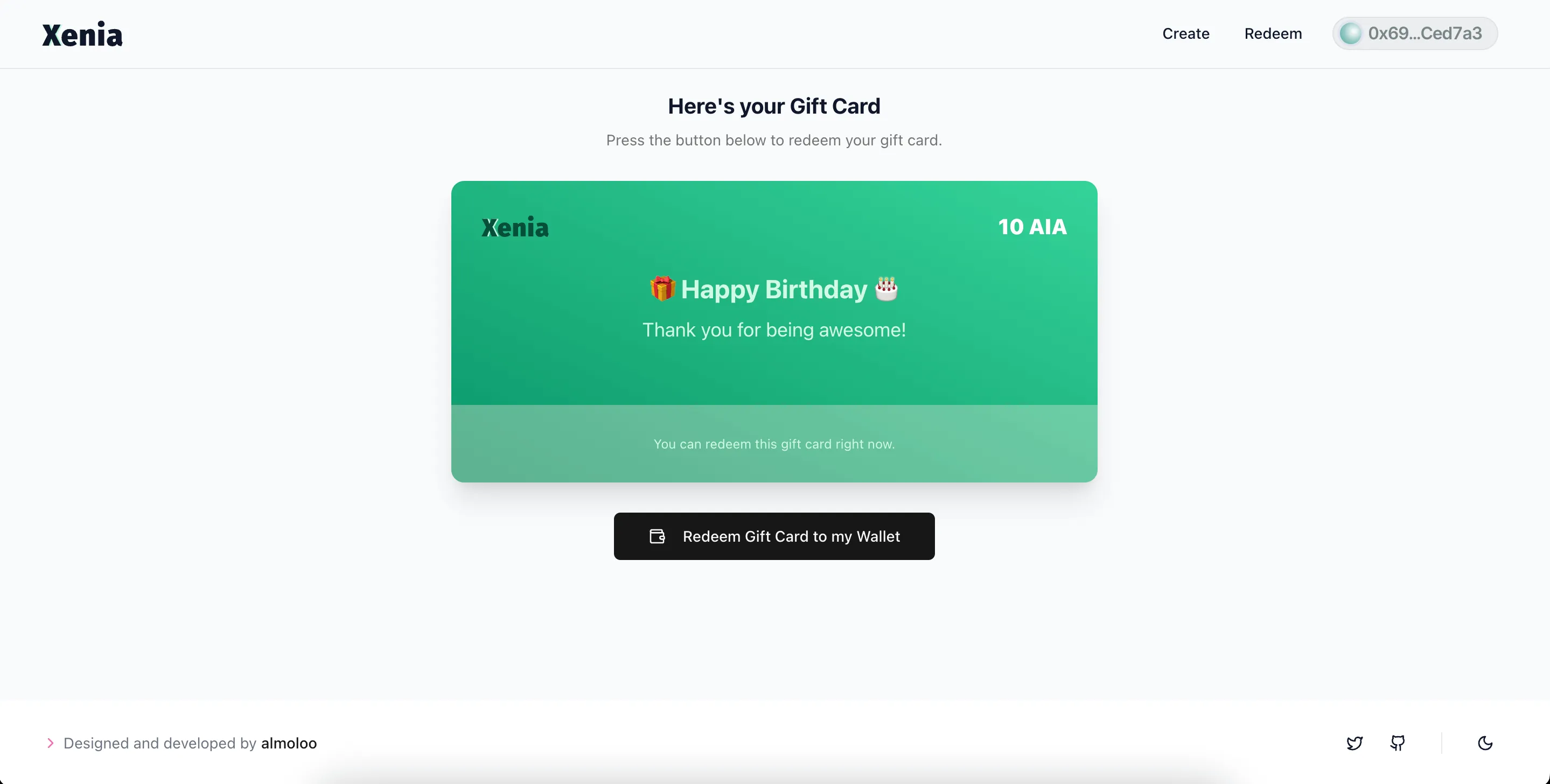
Xenia moves gift cards on-chain. Each card is created with a cryptographically hashed, unique code, so a card can’t be forged or double-redeemed — every issue, validation, and redemption is a transparent, verifiable transaction rather than a row in a merchant’s database.
How it works
The Xenia.sol contract exposes the whole lifecycle: createGiftCard hashes a new card into existence, validateGiftCard checks whether a card exists and is still redeemable, redeemGiftCard transfers funds to the recipient and marks the card spent, and getGiftCardsBySender lets an issuer pull every card they’ve created.
Key features
- Secure creation — unique, hashed codes prevent unauthorized or duplicate use
- Full validation — check existence and redemption status before trusting a card
- Recipient-only redemption — only a valid, unredeemed card can be cashed in
- Fully on-chain and auditable — every step is a transparent blockchain transaction
Tech stack
Solidity · Hardhat · EVM (AIA network)
Screenshots

NeoCard
NeoCard gives every wallet address a shareable profile that lives on-chain instead of on a company’s server. Set a username, bio, avatar, and social links once, and NeoCard mints a unique, shareable URL backed by the Neo X blockchain’s EVM compatibility — so the profile can’t be taken down or silently edited by a platform.
How it works
The NeoCard smart contract exposes two core functions: upsertProfile to create or update a profile, and getProfile to read one back by address. Because everything is EVM-compatible, the whole flow works with familiar tooling — MetaMask for the wallet, Hardhat + Ignition for deployment.
Key features
- Create and update profiles directly from a connected wallet
- Immutable, decentralized storage — profile data lives on-chain
- Unique shareable URLs — one link per wallet address, shareable anywhere
- Fully on-chain logic — every read/write goes through the smart contract
Tech stack
Next.js · Wagmi · Solidity · Neo X (EVM-compatible) · Hardhat + Ignition

Quest
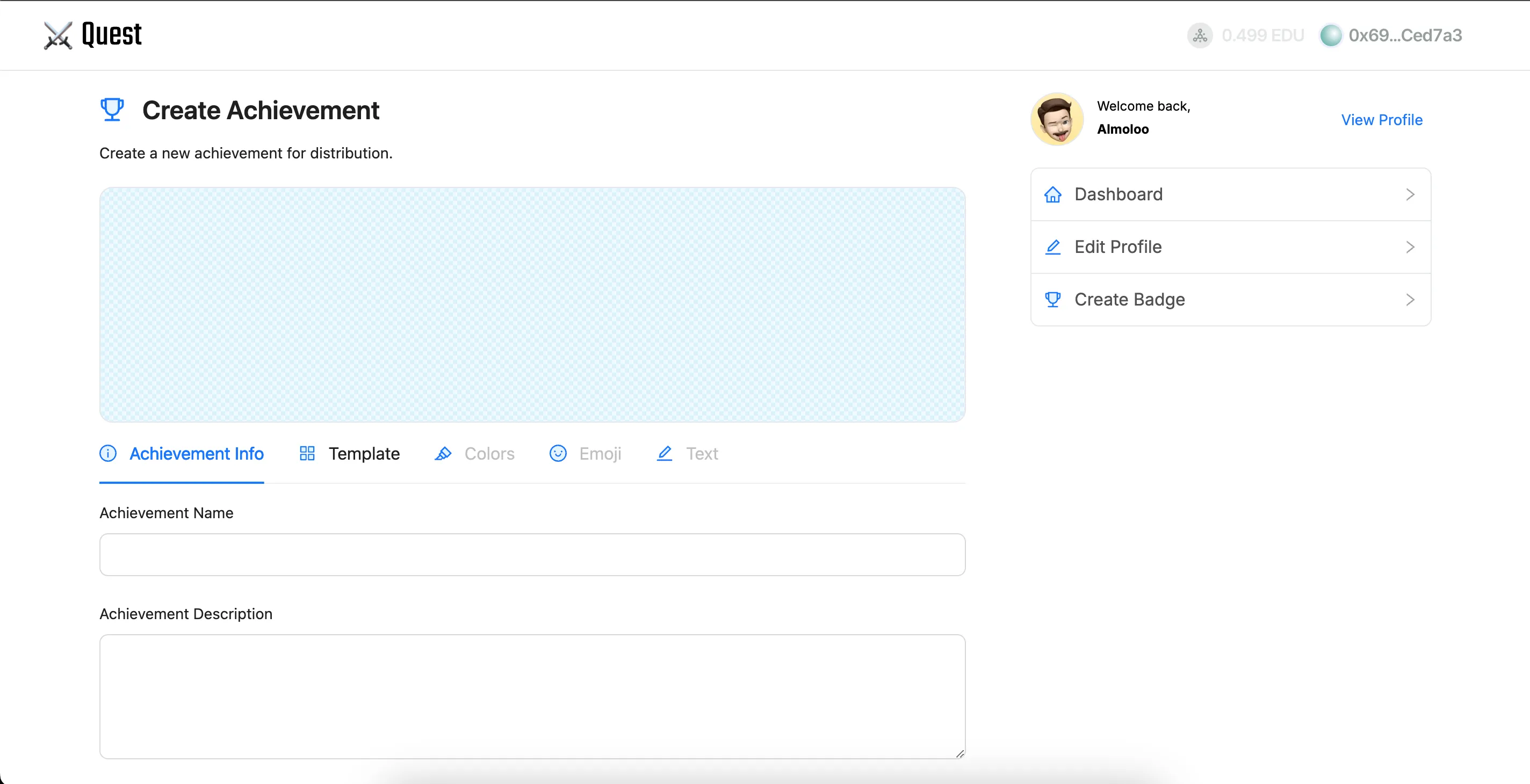
Quest lets people design, mint, and manage achievement badges on the Open Campus network — think verifiable credentials with a UI simple enough that “customize an emoji, pick a color, save it” is the whole flow.
How it works
Achievements are built from templates with custom emoji, text, and color, then saved on-chain via Open Campus so ownership and authenticity are independently verifiable rather than resting on a database record. Files and metadata are pinned to IPFS through Pinata, and wallet connections run through Web3Modal.
Key features
- Customizable achievements — templated badges with custom emoji, text, and colors
- Blockchain-backed verification — every achievement is stored and verifiable on Open Campus
- Search and filter — find achievements across a growing collection
- Analytics — basic insight into achievement activity
Tech stack
Next.js · wagmi · Tailwind CSS · Pinata (IPFS) · Web3Modal · Ant Design
Built with Hossein.
Screenshots

Fraxtal Starter Kit
Fraxtal Starter Kit exists to skip the part of starting a new Fraxtal project that’s the same every time: wallet connection, contract boilerplate, IPFS wiring, and UI setup. Run npx create-frax-app my-project and get a working environment with a sample contract already deployed to Fraxtal mainnet and testnet.
Key features
- Explorer API access — a comprehensive Fraxtal explorer API proxied through the backend, so no API keys ship to the client
- IPFS integration — ready-to-use upload/fetch via Pinata
- Smart contract boilerplate — a sample contract pre-deployed to mainnet and testnet, plus Hardhat wired up for compiling, testing, and deploying your own
- Wallet connection — MetaMask, WalletConnect, and injected wallets working out of the box
- Next.js + TypeScript frontend with Tailwind CSS and pre-installed shadcn/ui components
Tech stack
Next.js · TypeScript · Tailwind CSS · shadcn/ui · Hardhat · Pinata (IPFS) · Fraxtal network

Moth
Moth is a fully on-chain royalty/loyalty points system: shop owners set up a customizable gateway profile, customers earn Algorand Standard Assets (ASAs) by transacting through it, and those points can be spent on discounts in later purchases — all recorded on Algorand rather than a merchant’s internal ledger.
How it works
Each shop owner configures their own gateway with its own settings, and the site lets shoppers browse available shops. Payment flows redirect to a gateway URL carrying the recipient wallet, amount, and a callback URL; once the transaction completes, the platform redirects back with a transaction ID the client can independently verify on-chain — no trust in the platform’s own bookkeeping required. Earned points are also transferable peer-to-peer, turning the loyalty system into something closer to a shared currency between users.
Key features
- On-chain loyalty system — points are ASAs, secured and settled on Algorand
- Point transfers — send earned points to friends and family
- Shop owner profiles — customizable gateway per shop, browsable storefront
Tech stack
Algorand (ASAs, smart contracts) · Pinata (IPFS)
Built for the Algorand “Change the Game” hackathon (consumer track) with Hossein.
Plutus
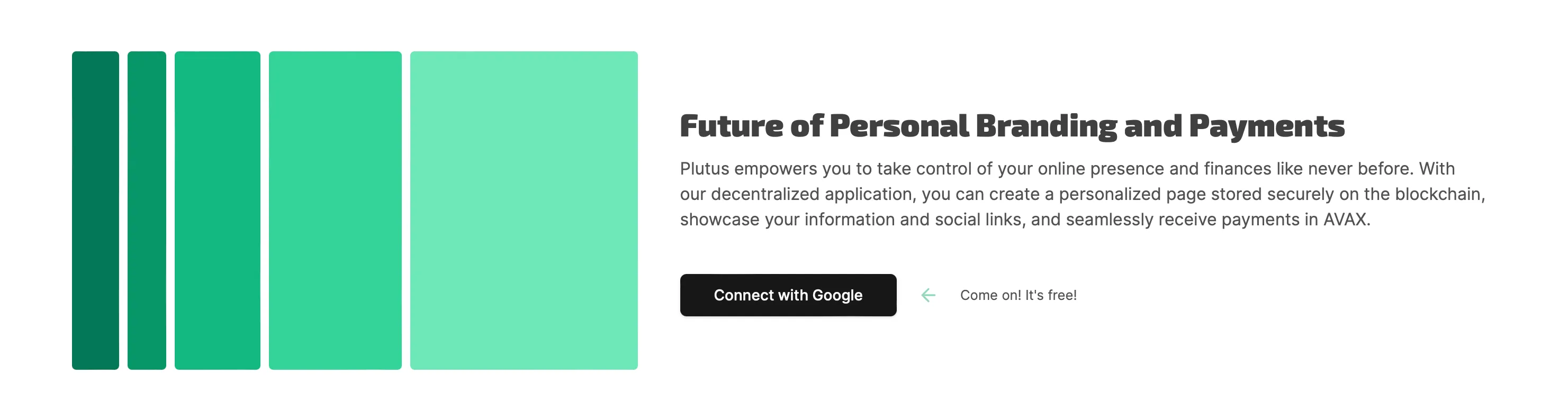
Plutus was built for the Avalanche Frontier hackathon to give creators a profile they fully control: sign in with Particle Network Auth (Google, Twitter, email, or wallet), get a unique profile URL tied to your wallet address, and let visitors send AVAX donations directly to support your work.
How it works
Authentication runs through Particle Network, so a wallet address becomes the profile’s identifier without forcing every visitor through a seed-phrase flow. Profile data — name, bio, picture — is written to the Avalanche network (Fuji testnet), and the dashboard uses the Covalent Unified API to surface “new users” and “latest transactions” pulled straight from on-chain smart contract events. The donation contract is ownable, with a configurable fee percentage taken on each donation received.
Key features
- Multi-method authentication via Particle Auth, with wallet address as the unique identifier
- On-chain profile creation — name, bio, and avatar written to Avalanche
- Public profile viewing — any profile is viewable by wallet address
- AVAX donations — send crypto support directly, recorded by the Plutus contract
- Configurable platform fee — ownable contract with an adjustable donation fee
Tech stack
Next.js · Solidity · Avalanche (Fuji testnet) · Particle Network Auth · Covalent Unified API
Built for the Avalanche Frontier hackathon with Hossein.
Screenshots

Lucid
Lucid is a private dream journal with a twist: entries are backed by the DataverseOS blockchain, so the record of what you wrote and when is tamper-evident rather than sitting in a plain database row you could quietly edit later. Users can keep their log private or choose to make individual entries public and explore patterns over time.
Key features
- Secure, blockchain-backed journaling via DataverseOS for confidentiality and integrity
- User authentication — create an account and log in securely
- Dream entries — date, description, and emotion tagging per entry
- Responsive design — built with React for a consistent experience across devices
Tech stack
React · TypeScript · DataverseOS · Tailwind CSS · shadcn/ui
Built for the Rebuild Ownership 2.0 hackathon.

Luxo
Luxo is a clean, standalone viewer for Lukso Universal Profiles — paste or navigate to a profile and see its data rendered without needing the full Lukso ecosystem tooling. Built specifically for the BuildUP #2 hackathon, it’s a smaller, focused precursor to the profile-widget ideas explored later in Echo and Middleman.
Tech stack
Next.js · React · shadcn/ui · Pinata (IPFS)
Screenshots


Bellman
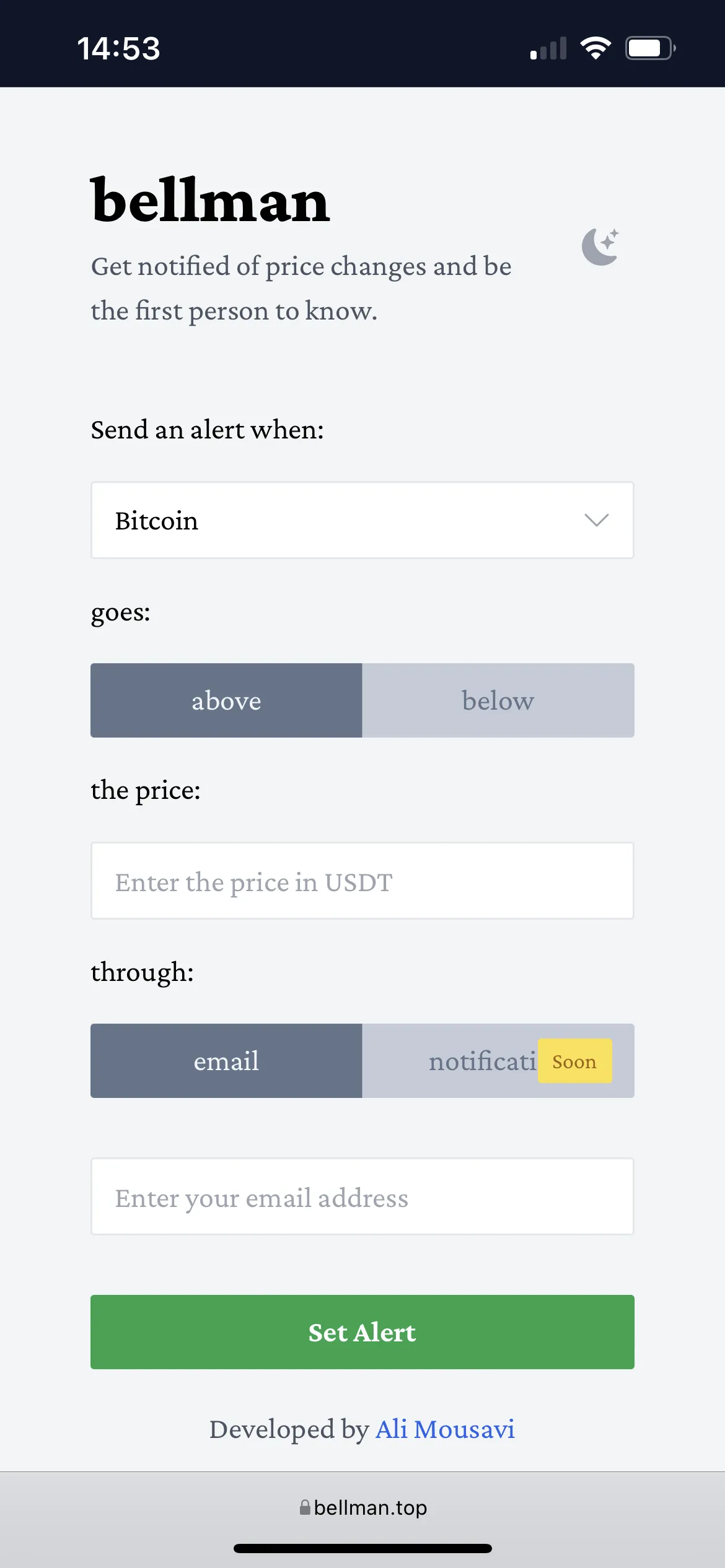
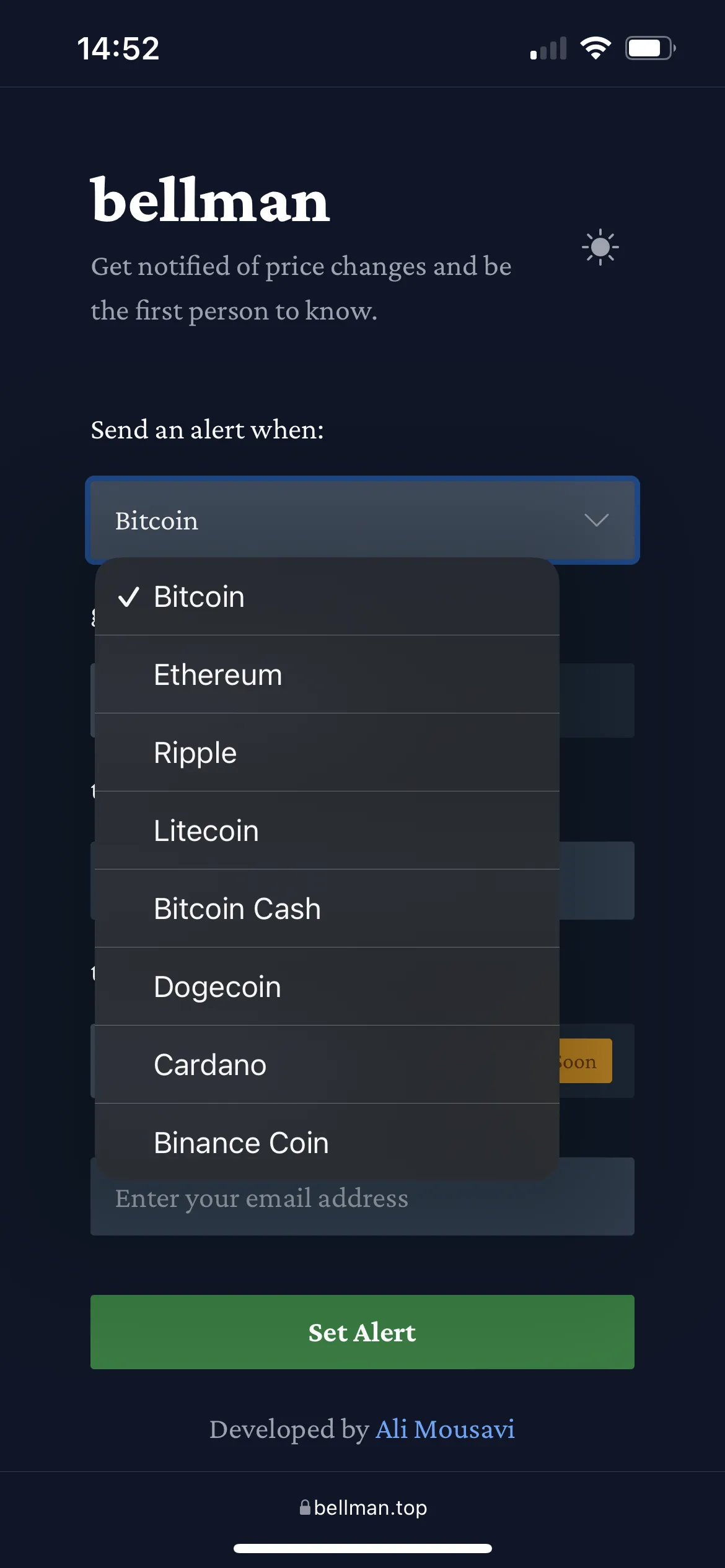
Bellman is a straightforward price-alert service: pick a coin, set a target price, and get an email the moment it’s crossed. Originally built for a Gitcoin contest, it periodically polls the Binance API for prices and checks them against stored alerts.
Key features
- Price alerts — set a target price per coin and get notified by email when it’s hit
- Periodic price polling via the Binance API
- Mobile-friendly UI in both light and dark mode
Tech stack
Node.js · Express · Tailwind CSS · Binance API · Flatfile (alert storage)
Screenshots

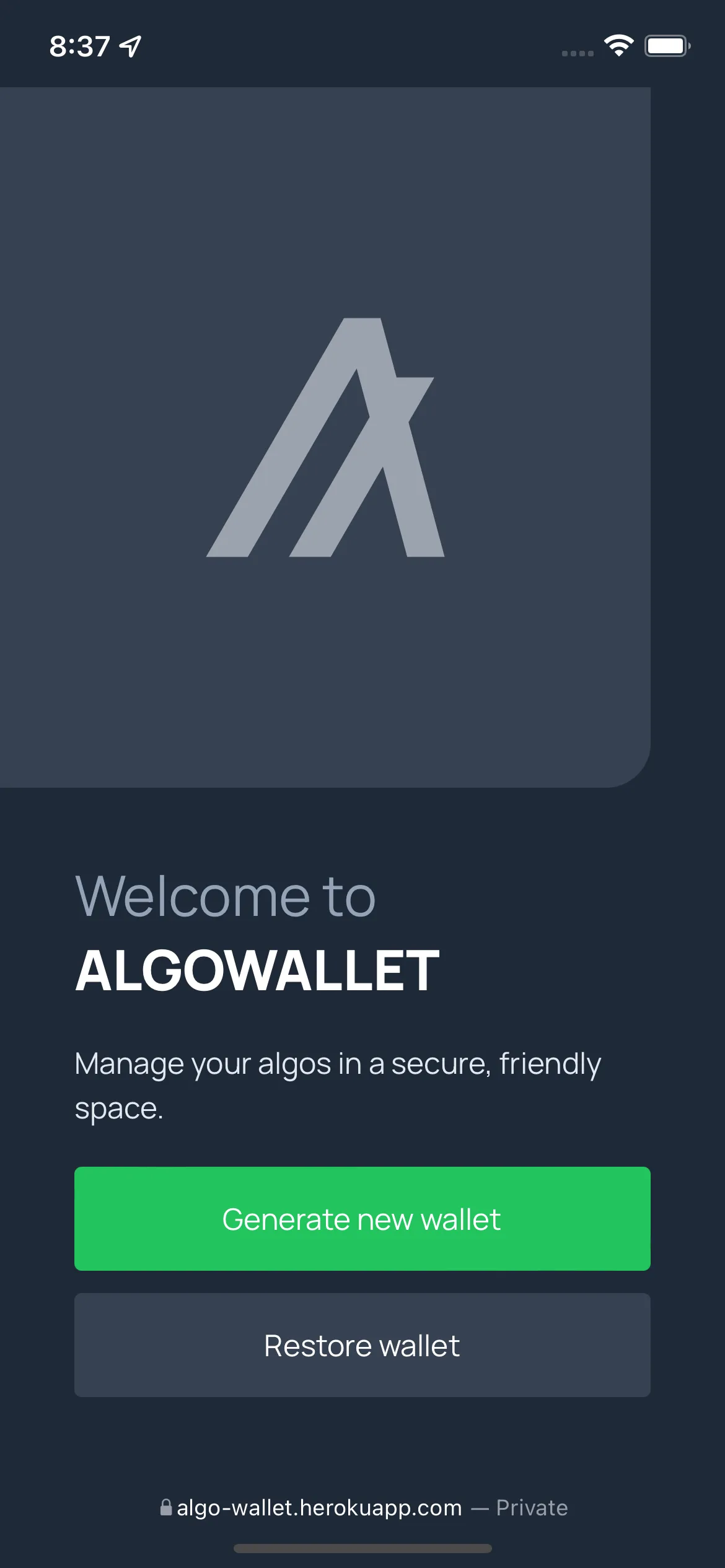
Algorand Wallet
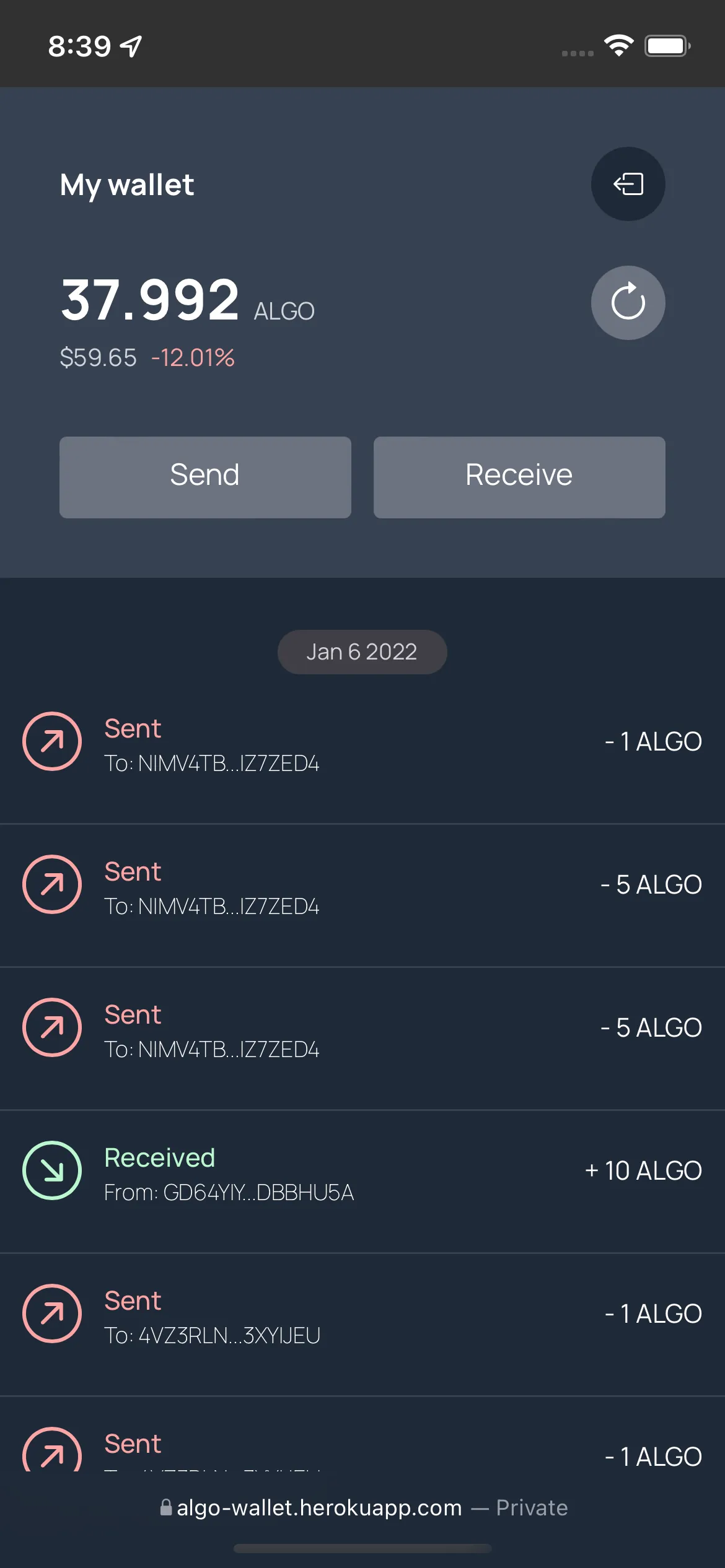
A custodial wallet for Algorand, built for a 30-day Gitcoin contest, focused on making the core wallet actions — generate, check balance, receive, send, review history — work through a simple web UI backed by Tatum’s wallet API and SDK instead of wiring up Algorand’s own SDKs from scratch.
Key features
- Wallet generation and balance via Tatum’s Algorand integration
- Send and receive with modal flows for both directions
- Transaction history — pulled from AlgoExplorer’s API, since Tatum didn’t expose this directly
- Live ALGO price — current price and daily change via the CoinGecko API
Tech stack
Node.js · Express · EJS · Tatum API/SDK · Firebase Firestore · AlgoExplorer API · CoinGecko API
Screenshots